The ASPCA Poison Control Center receives over 400,000 calls annually, and kittens are among the most frequent victims of household toxin exposure. Kitten-proofing your home before arrival eliminates the most common hazards — toxic plants, electrical cords, small swallowable objects, and unsecured windows — that send thousands of kittens to emergency veterinary clinics each year.
What Are the Biggest Dangers to Kittens at Home?
- Toxic plants — Lilies can cause fatal kidney failure; 400+ common houseplants are toxic to cats
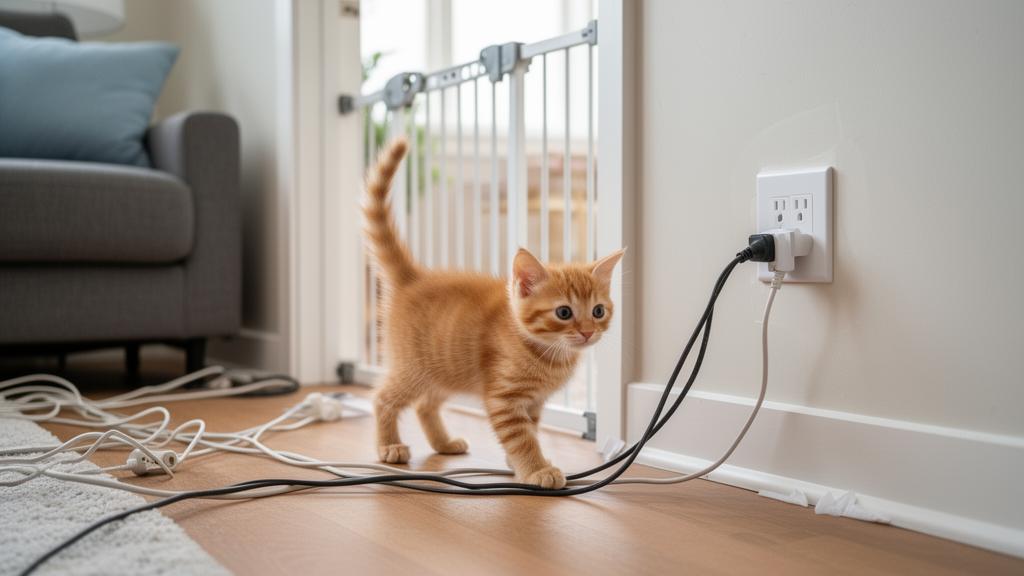
- Electrical cords — Chewing causes electrocution, mouth burns, and house fires
- Small objects — Hair ties, rubber bands, string, and tinsel cause intestinal obstructions requiring surgery
- Unsecured windows — "High-rise syndrome" from falls through loose screens is common in cats
- Cleaning chemicals — Store all chemicals in locked cabinets; bleach and phenol-based cleaners are especially dangerous
How Do You Kitten-Proof Each Room?
Kitchen
Secure trash cans with lids, store cleaning supplies in locked cabinets, keep stovetop covers in place, and block gaps behind the refrigerator and dishwasher. Never leave hot burners unattended with a curious kitten nearby.
Living Room
Cover all electrical cords, remove small decorative objects that could be swallowed, secure bookshelves to walls (kittens climb everything), and check behind furniture for gaps.
Bathroom
Keep toilet lids closed, store medications in closed cabinets, remove rubber bands and hair ties, and never leave standing water in bathtubs.
Bedroom
Check under the bed for small objects, secure blind cords (strangulation risk), keep jewelry and hair accessories in closed containers, and ensure closet doors close securely.
Which Plants Must Be Removed Before Getting a Kitten?
The ASPCA maintains a database of 400+ plants toxic to cats. The most dangerous include:
- Lilies (all species) — Even pollen can cause fatal kidney failure
- Sago palms — Extremely toxic, causes liver failure
- Philodendrons — Cause oral irritation and vomiting
- Poinsettias — Mildly toxic, causing GI upset
Safe alternatives include spider plants, Boston ferns, and cat grass (wheatgrass).
Related Cat Care Guides
- The Ultimate New Cat Checklist
- Introducing Your New Cat to Other Pets
- Helping a Stressed or Anxious Cat