The Cornell Feline Health Center recommends a gradual introduction process spanning 1–4 weeks, beginning with complete separation and progressing through scent swapping, door feeding, and supervised meetings. Cats are territorial animals, and face-to-face introductions without preparation trigger fight-or-flight responses that can permanently damage the relationship between pets.
Why Do Cats Need Slow Introductions?
Cats are not naturally social in the way dogs are. In the wild, cats maintain individual territories and view unfamiliar cats as potential threats. The slow-introduction protocol works by building positive associations before direct contact occurs.
What Is the Step-by-Step Introduction Process?
Step 1: Complete Separation (Days 1–3)
Keep the new cat in a dedicated base camp room with all essentials. No visual contact with existing pets. This allows the new cat to decompress and establish a safe territory.
Step 2: Scent Swapping (Days 3–7)
Swap bedding, toys, or cloths between cats so they become familiar with each other's scent. Rub a sock on one cat's cheeks and place it near the other cat's food bowl. Positive scent associations build the foundation for acceptance.
Step 3: Door Feeding (Days 5–10)
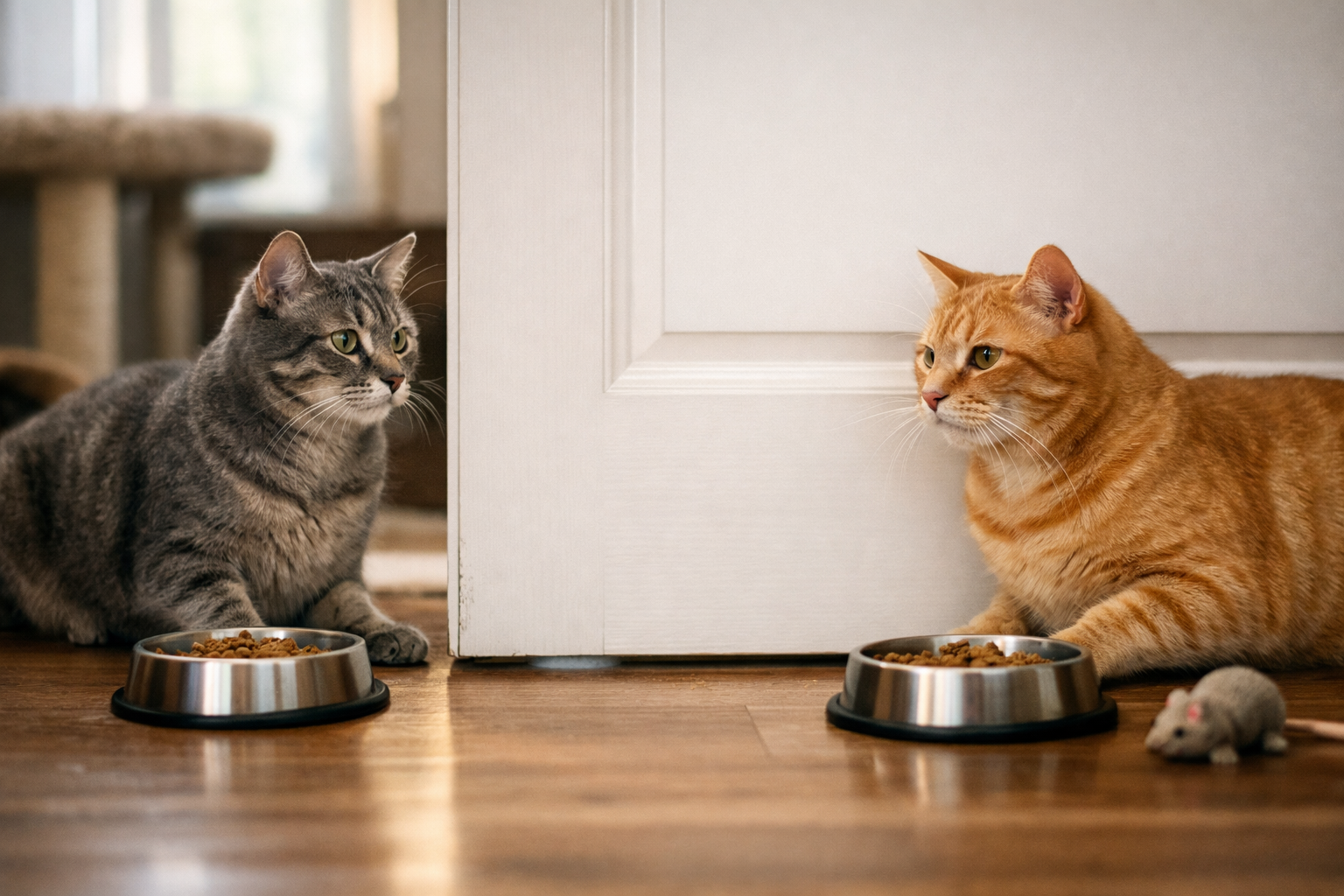
Feed both cats on opposite sides of the closed door. Start with bowls several feet apart and gradually move them closer over days until both eat calmly right next to the door.
Step 4: Visual Introduction (Days 7–14)
Use a baby gate or crack the door for brief visual contact during feeding. If either cat hisses, growls, or shows aggression, return to the previous step for several more days.
Step 5: Supervised Meetings (Days 14+)
Allow short supervised interactions in a neutral space. Have high-value treats ready to reward calm behavior. Gradually increase duration as both cats show relaxed body language.
What Are the Signs of a Successful Introduction?
- Both cats eat calmly near each other
- Mutual grooming or slow blinking
- Relaxed body posture during shared space time
- Playing together without aggressive escalation