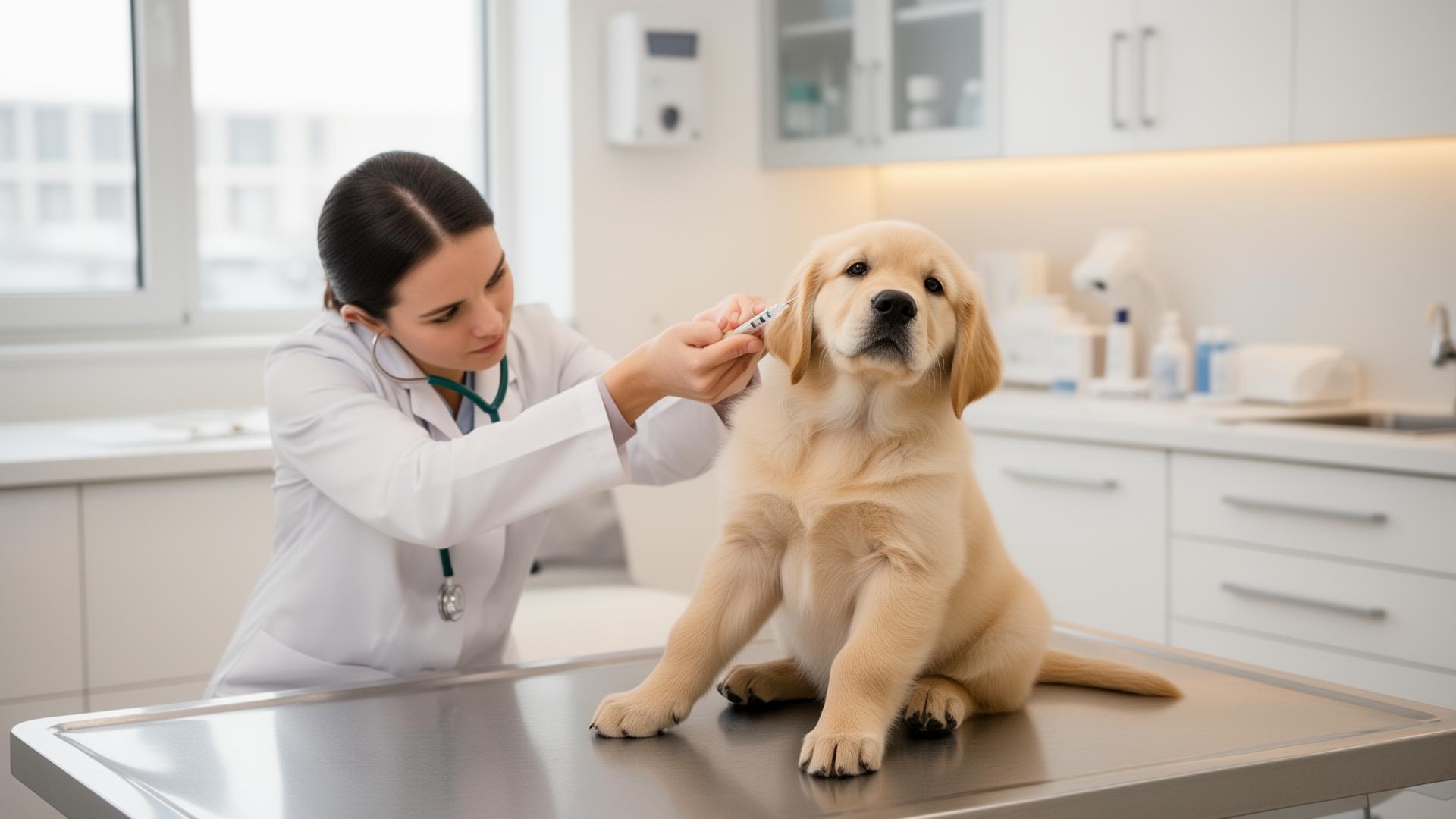
Core vaccines—DHPP for dogs and FVRCP for cats—are required for all pets regardless of lifestyle, per the American Animal Hospital Association (AAHA) 2026 guidelines. Non-core vaccines are risk-based, recommended depending on geography, exposure, and lifestyle factors. Puppy and kitten series begin at 6–8 weeks, with boosters every 3–4 weeks until 16 weeks of age. Adult boosters follow a 1- to 3-year cycle.
Which Vaccines Does Your Puppy Need and When?
The AAHA and AVMA recommend a standardized puppy vaccination series that builds immunity in stages. Starting too early can be ineffective due to maternal antibody interference; starting too late leaves a dangerous immunity gap.
| Age | Core Vaccines | Optional |
|---|---|---|
| 6–8 weeks | DHPP #1 | Bordetella (if boarding) |
| 10–12 weeks | DHPP #2 | Leptospirosis #1, Lyme #1 |
| 14–16 weeks | DHPP #3, Rabies | Leptospirosis #2, Lyme #2 |
| 12–16 months | DHPP Booster, Rabies Booster | Canine Influenza |
Key Takeaway
Never skip the 16-week DHPP and rabies vaccines—this is the critical window where maternal antibodies have fully waned and your puppy is most vulnerable to parvovirus and distemper.
What Are Non-Core Vaccines and Does Your Pet Need Them?
Non-core vaccines target diseases that are regionally prevalent or lifestyle-dependent. The AAHA classifies these as "recommended" rather than "required," but they can be life-saving in the right context.
- ✓Bordetella (kennel cough) — Essential for dogs who board, attend daycare, or visit dog parks.
- ✓Leptospirosis — Recommended in areas with wildlife exposure or standing water. Cases have risen 30% since 2020.
- ✓Canine Influenza (H3N2/H3N8) — Recommended for dogs in high-density social environments.
- ✓Lyme Disease — Geographic risk primarily in the Northeast, Upper Midwest, and Pacific Coast.
- ✓FeLV (Feline Leukemia) — Recommended for outdoor cats or multi-cat households with outdoor access.
How Much Do Pet Vaccinations Cost in 2026?
Vaccination costs vary significantly by region, clinic type, and whether you're paying à la carte or through a wellness plan. Here's a breakdown of average 2026 costs:
| Vaccine | À la Carte | With Wellness Plan |
|---|---|---|
| DHPP (per dose) | $30–$50 | Included |
| Rabies | $20–$40 | Included |
| Bordetella | $25–$45 | Included |
| Leptospirosis (2 doses) | $40–$70 | $20–$35 |
| Canine Influenza (2 doses) | $50–$80 | $30–$50 |
| Full Puppy Series (total) | $200–$400 | $75–$150 |
Track Your Pet's Vaccination Schedule
Use the interactive scheduler below to track which vaccines your pet has received and what's coming next. Select your pet's age group to see the recommended protocol.
Vaccination Scheduler
Track your pet's vaccination schedule and requirements.
Frequently Asked Questions About Pet Vaccinations
What Should You Do Next?
Review your pet's vaccination records and compare them against the AAHA 2026 guidelines above. If your pet is overdue for any core vaccines, schedule an appointment within the next 2 weeks. For puppies, ensure you complete the full series without gaps longer than 4 weeks between doses. If you're unsure about non-core vaccines, discuss your pet's specific risk profile with your veterinarian.