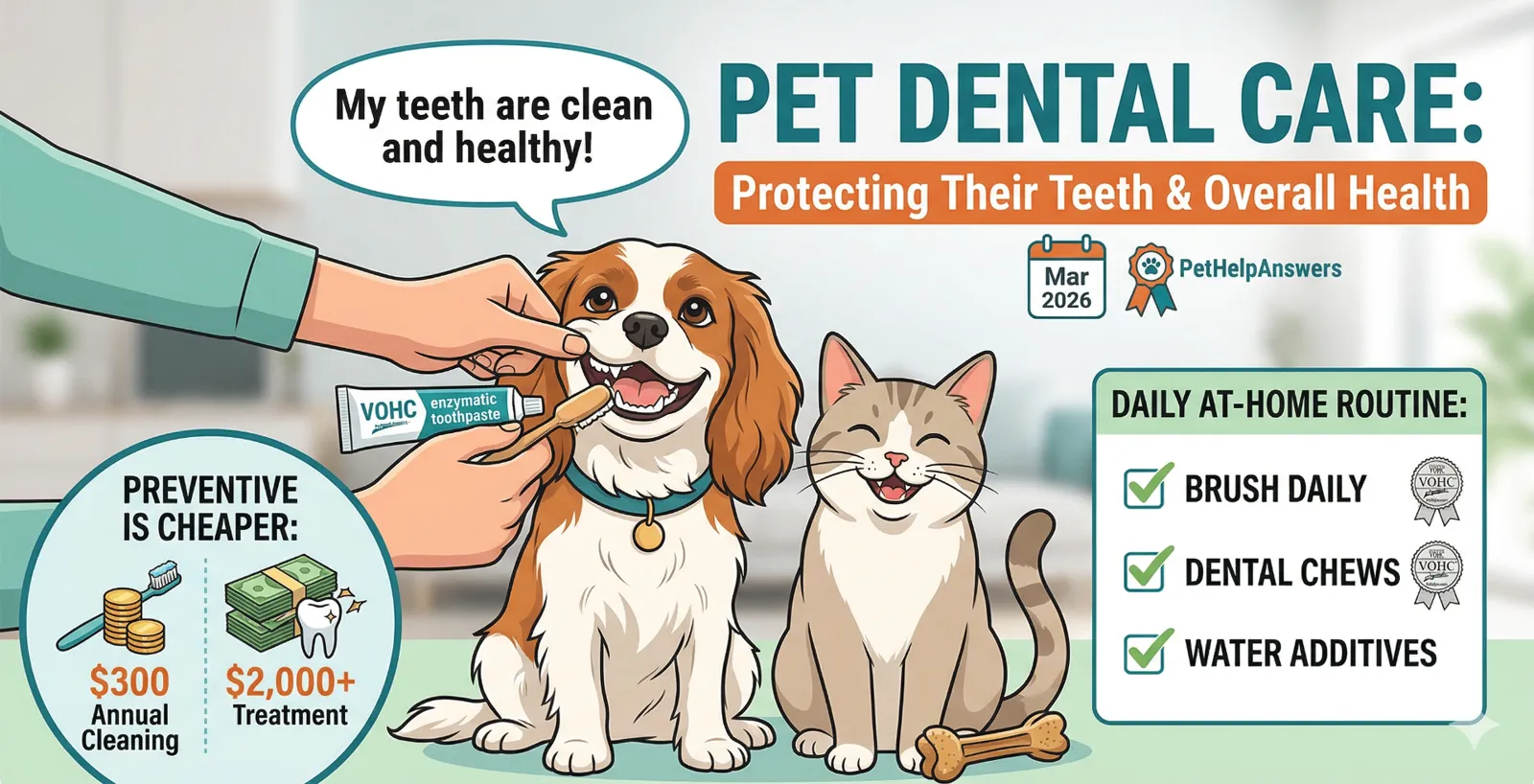
Periodontal disease affects 80% of dogs and 70% of cats by age 3, according to the American Veterinary Medical Association (AVMA), making it the most diagnosed condition in companion animals. Untreated dental disease causes chronic pain, tooth loss, and systemic organ damage — bacteria from infected gums enter the bloodstream and damage the heart, liver, and kidneys. Annual professional dental cleanings and daily at-home brushing are the gold standard for prevention.
How Serious Is Dental Disease in Pets?
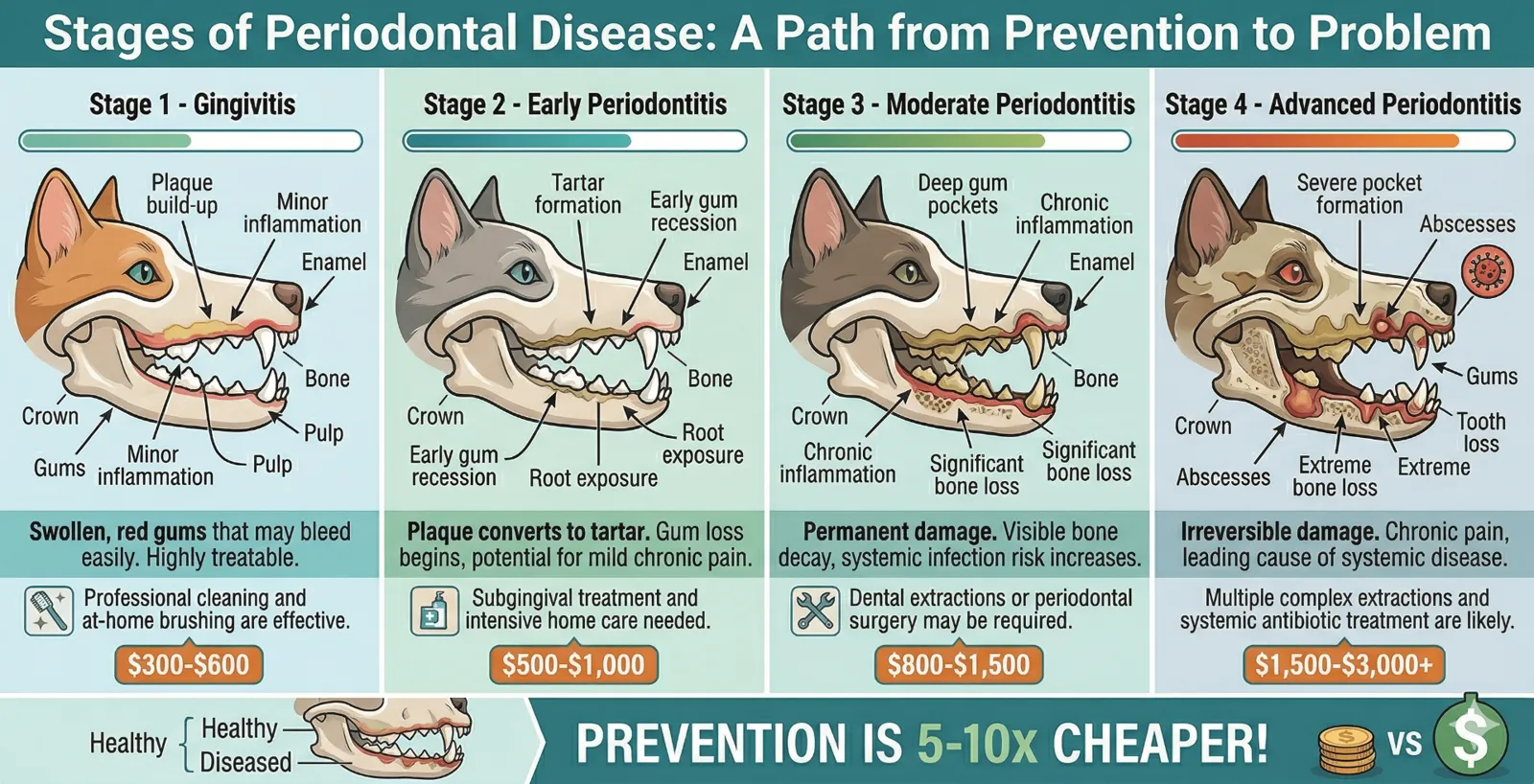
Dental disease is far more than bad breath. The American Animal Hospital Association (AAHA) classifies periodontal disease into four stages, each with escalating consequences:
| Stage | Clinical Signs | Treatment | Avg. Cost |
|---|---|---|---|
| Stage 1 — Gingivitis | Red gums, mild plaque, no bone loss | Professional cleaning | $300–$600 |
| Stage 2 — Early Periodontitis | Tartar, gum recession, <25% bone loss | Cleaning + subgingival treatment | $500–$1,000 |
| Stage 3 — Moderate Periodontitis | 25–50% bone loss, loose teeth, pain | Cleaning + extractions likely | $800–$2,000 |
| Stage 4 — Advanced Periodontitis | >50% bone loss, infection, organ risk | Multiple extractions, antibiotics | $1,500–$4,000+ |
Critical Warning
80% of dental disease exists below the gumline and is invisible without dental X-rays under anesthesia. "Anesthesia-free" dental cleanings are cosmetic only and are explicitly opposed by the American Veterinary Dental College (AVDC) because they leave active disease untreated.
Which Breeds Are Most Prone to Dental Disease?
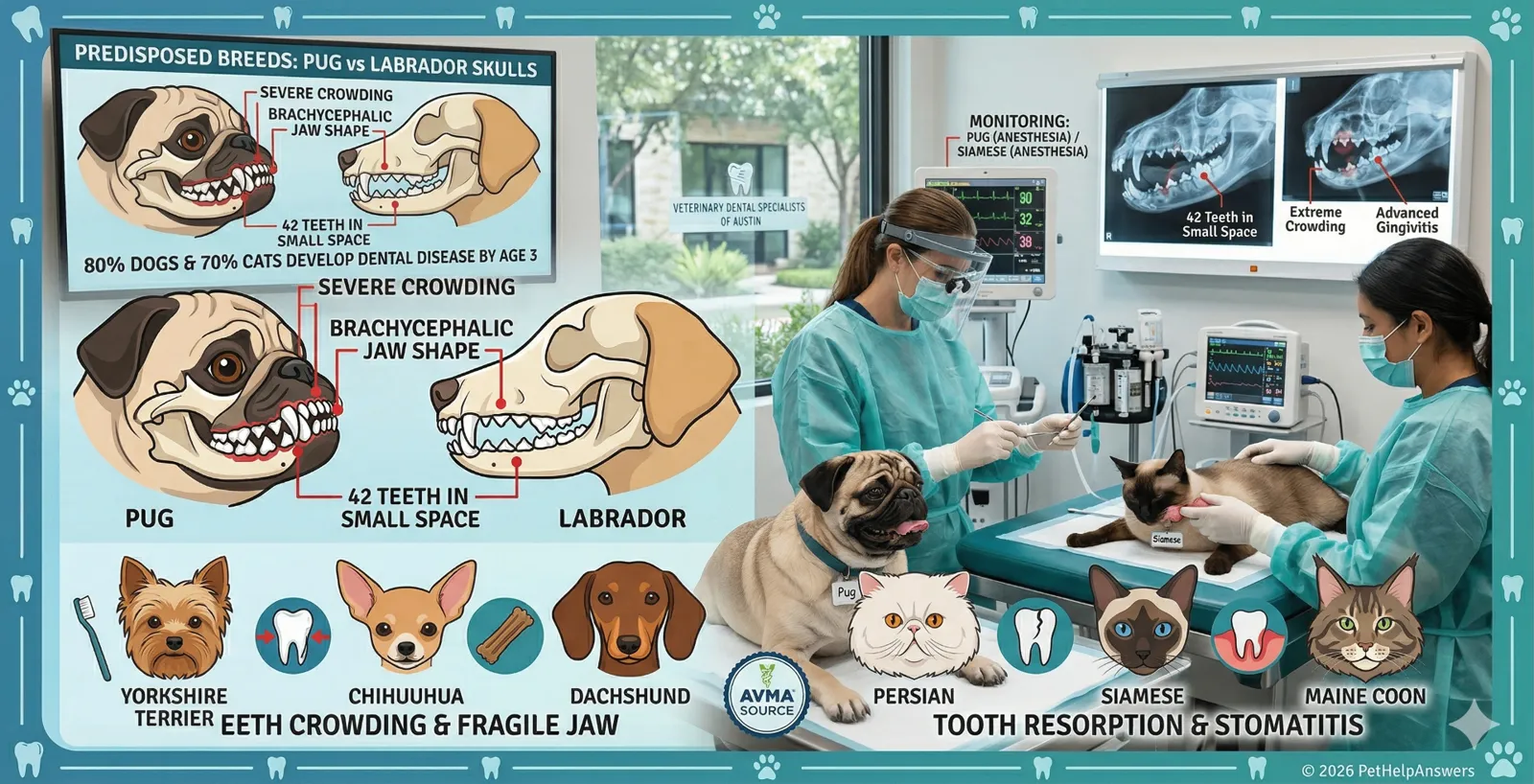
Small and toy breeds are disproportionately affected due to tooth crowding in small jaws. Brachycephalic breeds face additional challenges from misaligned bite patterns:
| Breed | Dental Risk Level | Primary Issue |
|---|---|---|
| Yorkshire Terrier | Very High | Severe crowding, retained deciduous teeth |
| Chihuahua | Very High | Crowded teeth, thin enamel |
| Dachshund | High | Narrow jaw, periodontal pockets |
| Pomeranian | High | Small mouth, rapid tartar buildup |
| Cavalier King Charles Spaniel | High | Malocclusion, crowding |
| Greyhound | High | Genetic enamel defects (unique to breed) |
| French Bulldog | Moderate–High | Brachycephalic jaw misalignment |
| Labrador Retriever | Moderate | Chewing injuries, fractured teeth |
Not sure about your breed's dental risk? Check our Breed Health Risk Assessor for a complete health profile including dental predispositions.
The At-Home Dental Care Routine
Daily brushing is the single most effective way to prevent dental disease between professional cleanings. The Veterinary Oral Health Council (VOHC) recommends this evidence-based routine:
- ✓Brush daily with enzymatic pet toothpaste (never human toothpaste — xylitol and fluoride are toxic to pets). The VOHC seal of approval indicates clinical efficacy.
- ✓Use a finger brush or soft-bristled pet toothbrush angled at 45° to the gumline. Focus on the outer surfaces of the upper teeth — where 85% of tartar accumulates.
- ✓VOHC-approved dental chews (like OraVet, Greenies, or Whimzees) reduce plaque by 15–25% when used daily alongside brushing — but they're a supplement, not a replacement.
- ✓Water additives with chlorhexidine or zinc ascorbate can reduce bacterial load by 20–30%. Look for the VOHC seal.
- ✓Annual professional dental cleaning under anesthesia with full-mouth X-rays — this is the only way to evaluate the 60% of dental structure that exists below the gumline.
How Much Does Pet Dental Care Cost in 2026?
Dental care is one of the most variable veterinary expenses. Costs depend on disease severity, number of extractions, and geographic location:
| Procedure | Average Cost | Frequency |
|---|---|---|
| Routine cleaning (no extractions) | $300–$700 | Annual for small breeds, every 1–2 years for large |
| Cleaning + 1–3 extractions | $600–$1,200 | As needed |
| Complex extractions (surgical) | $500–$1,500 per tooth | As needed |
| Full-mouth X-rays | $150–$300 | Included with every cleaning |
| At-home toothpaste + brush | $15–$30/year | Daily use |
| Dental chews (VOHC-approved) | $20–$50/month | Daily |
Cost-Saving Tip
Prevention is 5–10x cheaper than treatment. A $300 annual cleaning prevents the $2,000–$4,000 Stage 3–4 periodontal disease treatment that 1 in 4 dogs will eventually need without preventive care. Check our Lifetime Cost Calculator to factor dental care into your pet ownership budget.
Does Pet Insurance Cover Dental Care?
Coverage varies significantly between insurers. Here's what to expect:
- ✓Accident/illness policies typically cover dental disease treatment and extractions — but NOT routine cleanings. If your dog develops Stage 3 periodontal disease, treatment is usually covered.
- ✓Wellness add-on plans from Nationwide, Embrace, and Pets Best include $150–$300/year for routine dental cleanings — often paying for themselves in year one.
- ✓Pre-existing dental conditions are excluded. If your dog already has documented periodontal disease, subsequent treatment for that condition won't be covered. Enroll early.
- ✓Dental injuries from accidents (fractured teeth, jaw trauma) are covered by nearly all accident/illness policies without waiting periods beyond the standard.
Frequently Asked Questions About Pet Dental Care
What Should You Do Next?
Lift your dog's lip and look at their back teeth — if you see yellow-brown buildup or red gums, schedule a dental evaluation. Start daily brushing with a VOHC-approved enzymatic toothpaste. If your pet hasn't had a professional cleaning in over a year, book one now. Use our Breed Health Risk Assessor to check if your breed is in the high-risk dental category, and review your wellness plan options to see if dental coverage is included.