
What Is Resting Respiratory Rate and Why Does It Matter?
Resting respiratory rate (RRR) measures how many times your pet breathes per minute while sleeping or in a relaxed state. Unlike heart rate—which requires specialized equipment for accuracy—RRR can be counted by any pet owner with a clock. This simplicity makes it one of the most powerful at-home monitoring tools endorsed by veterinary cardiologists.
The American College of Veterinary Internal Medicine (ACVIM) considers sleeping RRR the "gold standard" home metric for monitoring pets with known or suspected cardiac disease. When fluid begins accumulating in the lungs—the hallmark of congestive heart failure (CHF)—the body compensates by increasing respiratory effort. This change in breathing is often the first detectable sign, appearing weeks before coughing, lethargy, or exercise intolerance.
How Do You Count Your Pet's Resting Respiratory Rate?
The most accurate readings come during natural sleep or deep rest—not after exercise, excitement, or eating. Follow this protocol:
- Wait for sleep or deep rest. Your pet should be lying down with eyes closed or half-closed, breathing naturally.
- Watch the chest wall. One complete rise and fall of the chest = one breath.
- Count for 15 seconds. Multiply by 4 to get breaths per minute.
- Record immediately. Log the value with the date and time. Consistency matters more than any single reading.
- Repeat daily. A trend of 3+ consecutive readings above your pet's baseline warrants a veterinary call.
What Are Normal RRR Ranges?
| Species | Normal RRR | Concern Threshold | Urgent Threshold |
|---|---|---|---|
| Dogs | 12–30 breaths/min | >30 breaths/min (sustained) | >40 breaths/min |
| Cats | 12–40 breaths/min | >40 breaths/min (sustained) | >50 breaths/min |
How Does Automated RRR Tracking Compare to Manual Counting?
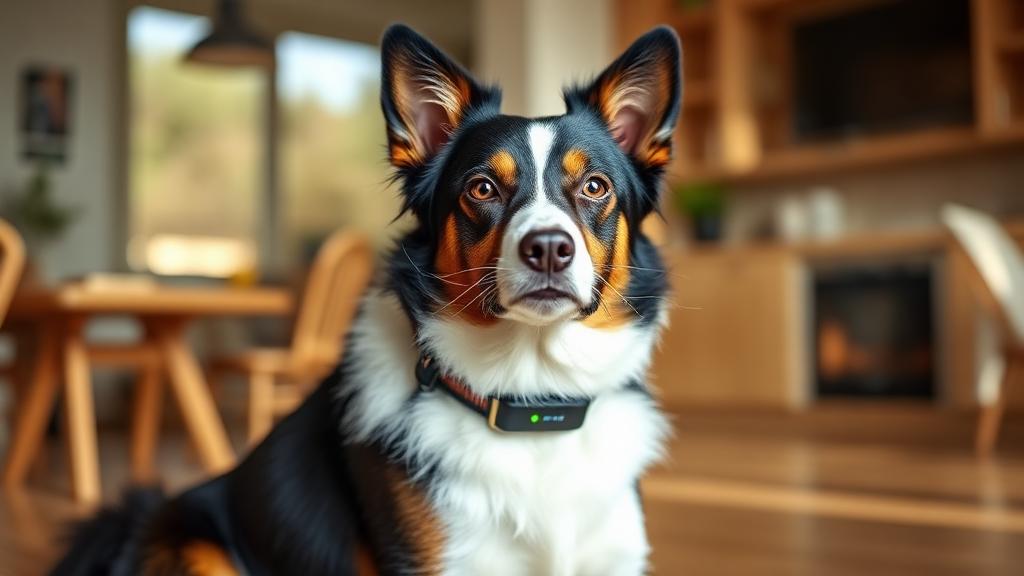
Smart collars like Maven Pet and PetPace now offer continuous automated RRR monitoring. Validation studies published in the Journal of Veterinary Internal Medicine found that these devices achieve a mean bias of only -0.78 breaths per minute compared to manual veterinary counts—making them clinically reliable for trend detection.
However, the critical advantage of automated tracking isn't accuracy—it's compliance. Studies show that owner-counted RRR has a compliance rate below 40% after the first month. Smart collars maintain 24/7 surveillance automatically, capturing data during every sleep cycle without requiring owner effort.
When Should You Call Your Veterinarian?
Contact your veterinarian if you observe any of the following patterns:
- 3+ consecutive readings above baseline (even if each reading is only slightly elevated)
- Any single reading >40 breaths/min (dogs) or >50 breaths/min (cats) while truly at rest
- A gradual upward trend over 1–2 weeks, even if individual readings remain within "normal" range
- Accompanying symptoms: coughing, reduced appetite, reluctance to exercise, or abdominal distension
Which Pets Benefit Most from RRR Monitoring?
While any pet owner can benefit from establishing a baseline, RRR tracking is especially critical for:
- Breeds predisposed to heart disease: Cavalier King Charles Spaniels (mitral valve disease), Doberman Pinschers (dilated cardiomyopathy), Maine Coons and Ragdolls (hypertrophic cardiomyopathy)
- Pets with diagnosed cardiac conditions on medication—RRR trends help veterinarians titrate drug dosages
- Senior pets (7+ years) entering the age range where cardiac disease prevalence increases dramatically
- Post-surgical patients recovering from cardiac or thoracic procedures where pulmonary edema is a known risk
The Bottom Line
Tracking your pet's resting respiratory rate is the simplest, most evidence-backed home monitoring practice available to pet owners. It costs nothing, takes 15 seconds, and can detect life-threatening cardiac deterioration weeks before your pet shows obvious symptoms. The AAHA and ACVIM both recommend it as a standard component of home cardiac care—and it starts with counting breaths tonight.