How Do AI Pet Doors Like Pawport Work?
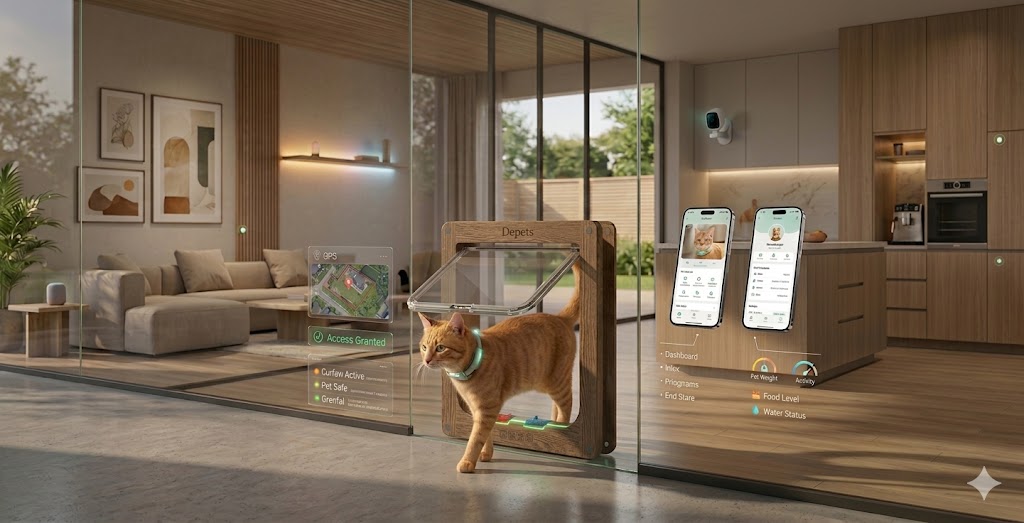
Traditional pet doors are a security liability—any animal (or intruder) can use them. AI-powered pet doors like Pawport solve this by using collar-based RFID or Bluetooth Low Energy (BLE) tags to identify authorized pets and grant exclusive access. The door remains locked to everything else, including strays, wildlife, and neighborhood cats.
But identification is just the baseline. Modern smart pet doors offer a suite of management features that transform a simple flap into an intelligent access control system:
Key Features of AI Pet Doors
| Feature | How It Works | Benefit |
|---|---|---|
| Selective access | RFID/BLE collar tag authentication | Only your pets enter; strays and wildlife are locked out |
| Curfew scheduling | Time-based lock/unlock via app | Keep outdoor cats inside at night to reduce predation risk |
| Entry/exit logging | Timestamped activity feed | Monitor patterns; detect changes in outdoor behavior |
| Multi-pet management | Per-pet access rules | Indoor-only cat stays in while outdoor cat comes and goes |
| Intruder lockout | Magnetic/mechanical lock when no tag detected | Home security is maintained; no open access point |
Why Do Curfews Matter for Cat Health?
The curfew feature addresses a genuine veterinary concern. Outdoor cats allowed to roam at night face significantly higher risks of vehicular trauma, predator encounters, and infectious disease exposure. The American Bird Conservancy and multiple veterinary organizations recommend nighttime confinement—but enforcing it manually is impractical. Automated curfew systems make it seamless: the door simply stops opening after a set time, and the cat adapts within days.
How Do Security Collars Like FireTag Integrate with Home Security?
Security-focused collars like FireTag represent a different angle on pet-smart-home integration. Rather than controlling access, these devices tie pet tracking and behavioral alerts into a household's broader security infrastructure:
- Real-Time GPS Tracking: Continuous location monitoring with geofencing. When a pet leaves a defined safe zone—your property boundary, for example—the system triggers an immediate alert to your phone and, optionally, to your home security dashboard.
- Escape Detection: If a pet door logs an exit but the collar's GPS shows the pet leaving the property perimeter, the system can automatically trigger security cameras to record, turn on exterior lights, or send alerts to neighbors.
- Emergency Identification: In the event of a house fire or natural disaster, firefighters and emergency responders can be alerted to the number and last-known location of pets in the home—a feature that has already been credited with saving animal lives.
- Behavioral Anomaly Alerts: Unusual patterns—a dog that normally stays in the yard suddenly pacing the perimeter, or a cat that hasn't used the pet door in 24 hours—can trigger welfare check notifications.
What Does a Fully Integrated Pet Smart Home Look Like?
The real power of these devices emerges when they're connected to each other and to the broader smart home ecosystem. Here's what a fully integrated setup looks like in 2026:
| Trigger | Automated Response | Platform |
|---|---|---|
| Pet enters through smart door | HVAC adjusts to pet-comfortable temp; lights turn on | HomeKit / Google Home |
| Collar detects stress (elevated HRV) | Calming music playlist activates; pheromone diffuser turns on | Alexa Routine |
| Pet leaves geofence perimeter | Security cameras record; exterior lights activate; owner alerted | Ring / Arlo integration |
| Scheduled feeding time | Smart feeder dispenses; pet door unlocks for 30 min after | IFTTT / native app |
| Owner leaves home (phone GPS) | Pet camera activates; pet door locks to outdoor-only mode | SmartThings |
What Should Pet Owners Consider Before Building a Pet Smart Home?
Integrating pet tech into a smart home is compelling, but there are practical considerations that determine whether the investment delivers real value:
- Interoperability: Not all pet devices work with all smart home platforms. Before purchasing, confirm compatibility with your existing ecosystem (HomeKit, Google Home, Alexa, SmartThings). Devices that require their own proprietary app with no third-party integrations create silos.
- Wi-Fi Reliability: Smart pet doors and collars depend on stable network connectivity. A door that can't authenticate a collar tag during a Wi-Fi outage becomes either permanently locked or permanently open—neither is acceptable.
- Battery Management: Collar tags need charging or battery replacement. A dead tag means a locked-out pet. The best systems have low-battery alerts sent days in advance; cheaper ones don't.
- Multi-Pet Complexity: Households with multiple pets—especially a mix of indoor and outdoor animals—need per-pet access rules. Not all smart doors support this level of granularity.
- Installation Requirements: Smart pet doors require professional installation in most cases, particularly for glass doors or walls. Budget $200–$500 for installation on top of the device cost.
Cost Comparison: Smart Pet Home Devices
| Device Category | Price Range | Ongoing Cost |
|---|---|---|
| AI smart pet door | $250–$600 | $0–$5/mo (app subscription) |
| Security/GPS collar | $100–$300 | $5–$15/mo (cellular plan) |
| Smart pet camera | $80–$250 | $0–$10/mo (cloud storage) |
| Automated feeder | $60–$200 | $0 |
What's Next for Pet-Integrated Smart Homes?
The convergence of pet tech and smart home infrastructure is accelerating. Key trends to watch in 2026 and beyond:
- Matter Protocol Adoption: The new Matter smart home standard promises universal interoperability. As pet tech manufacturers adopt Matter, the "does this work with my system?" problem will largely disappear.
- AI-Driven Routines: Instead of manually programming automations, AI will learn your pet's patterns and suggest or auto-create routines—"Your cat always comes inside at 7 PM. Should I set a curfew at 7:30?"
- Insurance Integration: Some pet insurance providers are exploring premium discounts for homes with verified smart monitoring—similar to how home insurance discounts exist for security systems.
- Veterinary Data Sharing: Smart home pet data—door usage patterns, activity levels, feeding regularity—could be shared with veterinarians as part of annual wellness assessments, providing a richer picture of the pet's daily life.
The Bottom Line
The smart home is no longer just for humans. AI pet doors eliminate the security risks of traditional flaps while giving owners granular control over their pet's outdoor access. Security collars extend the household's safety infrastructure to include its four-legged members. Together, these technologies are building a future where your home doesn't just shelter your pet—it actively participates in their safety, comfort, and care.