
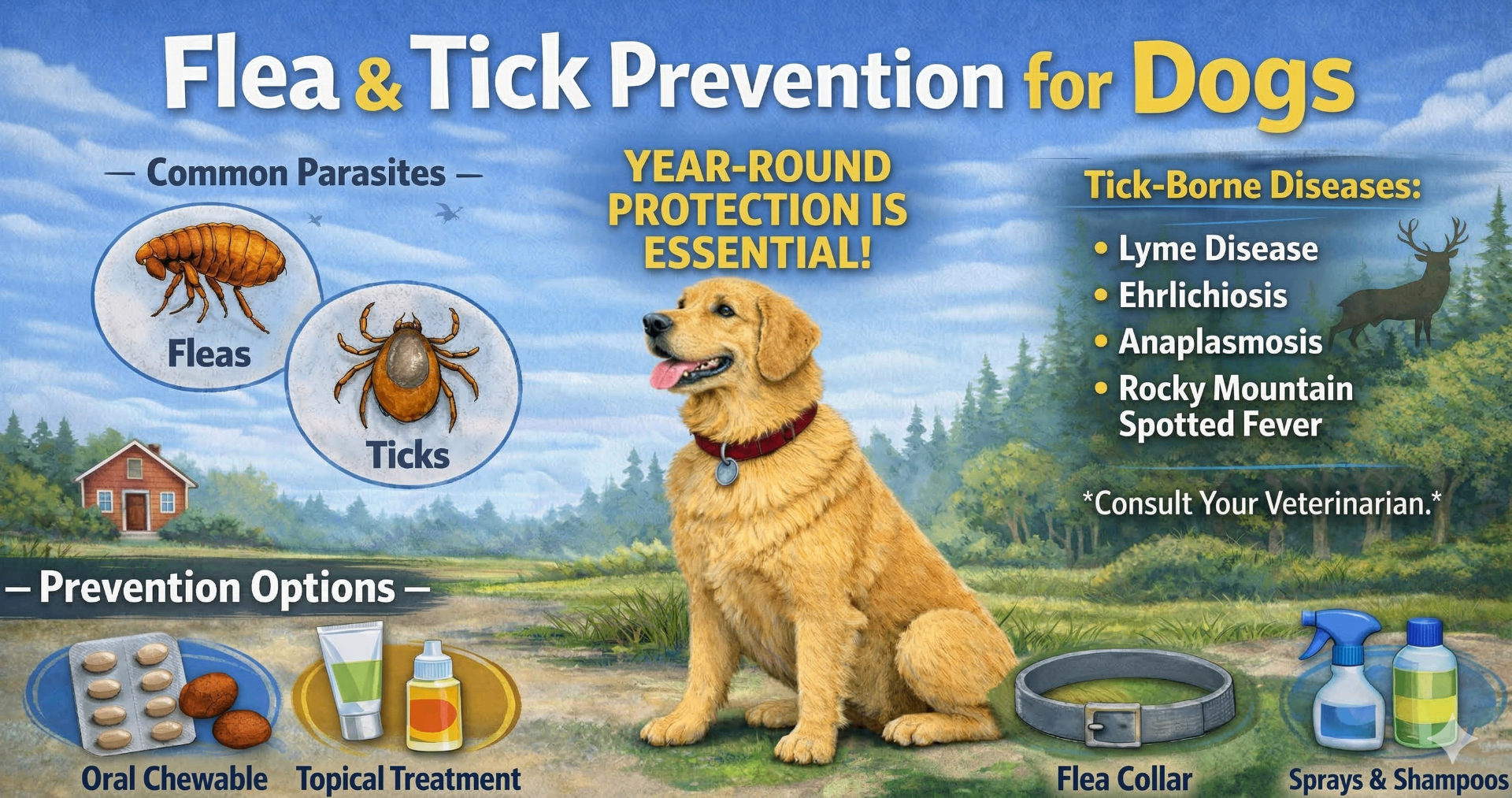
The Companion Animal Parasite Council (CAPC) recommends year-round flea and tick prevention for all dogs, regardless of where they live. Fleas can lay up to 50 eggs per day, allowing infestations to grow rapidly. Meanwhile, certain ticks can transmit diseases such as Lyme disease within 36–48 hours of attachment. Understanding how flea and tick prevention works is essential for protecting your dog's health.
What Is the Parasite Risk in Your Area?
Parasite prevalence varies significantly by region. Enter your ZIP code to see estimated risk levels for common dog parasites in your area.
Check Dog Parasite Risk in Your Area
Based on CAPC prevalence data & CDC tick surveillance
Why Is Flea & Tick Prevention Necessary Year-Round?
Many dog owners believe flea prevention is only needed during warm weather. However, parasites can survive indoors during winter and remain active in mild climates.
Reasons veterinarians recommend year-round prevention include:
- Fleas survive indoors in carpets and furniture
- Tick seasons are expanding due to climate change
- Wildlife such as squirrels and deer carry parasites into yards
- Dogs can bring fleas into homes and start infestations quickly
Once fleas enter a home, they reproduce rapidly and can become extremely difficult to eliminate.
What Is the Flea Life Cycle and Why Does It Matter?
Understanding the flea life cycle explains why prevention — not just treatment — is so important.
The Flea Life Cycle
Why infestations grow so fast — and why treatment must target every stage
Egg
1–10 days
- • Laid on the dog
- • Fall into carpets & bedding
- • Hatch within 1–10 days
Larva
5–20 days
- • Feed on organic debris
- • Hide in dark areas
- • Develop for 5–20 days
Pupa
Weeks–months
- • Protected cocoon stage
- • Can remain dormant for months
- • Triggered by warmth & vibration
Adult
2–3 months
- • Begin feeding immediately
- • Lay eggs within 24 hours
- • Up to 50 eggs per day
95% of fleas live in your home — not on your dog
Eggs, larvae, and pupae infest carpets, bedding, furniture, and floor cracks. Treating only the dog addresses just 5% of the problem. Effective flea control requires treating the dog and the environment simultaneously.
What Health Problems Do Fleas Cause in Dogs?
Fleas cause more than itching. They can trigger several health conditions that require veterinary treatment.
Flea Allergy Dermatitis (FAD)
Some dogs are allergic to flea saliva. Even a single bite can cause intense itching, red skin, hair loss, and scabs or hot spots. FAD is one of the most common dermatological conditions in dogs.
Tapeworm Infection
Dogs may swallow infected fleas while grooming themselves, transmitting tapeworms that live in the intestines. Signs include small white worm segments in stool, scooting behavior, and digestive discomfort.
Anemia From Severe Infestations
Heavy flea infestations can cause significant blood loss, particularly dangerous in puppies, senior dogs, or small breeds.
How Do You Identify Ticks on Dogs?
Knowing which tick bit your dog helps your veterinarian assess disease risk. Here are the four most common ticks that bite dogs in the United States.
Dog Tick Identification Chart
Common ticks that bite dogs in the United States
Deer Tick (Blacklegged Tick)
Ixodes scapularis
American Dog Tick
Dermacentor variabilis
Lone Star Tick
Amblyomma americanum
Brown Dog Tick
Rhipicephalus sanguineus
What Tick-Borne Diseases Should Dog Owners Know About?
Ticks can transmit multiple serious infectious diseases. Here are the most important ones.
Lyme Disease
Lyme disease is the most common tick-borne disease in the United States, according to the American Kennel Club (AKC). Symptoms may include joint pain, fever, lameness, and kidney damage in severe cases. Transmission typically occurs 36–48 hours after tick attachment.
Ehrlichiosis
Transmitted by the lone star tick, ehrlichiosis causes fever, lethargy, bleeding disorders, and enlarged lymph nodes.
Anaplasmosis
Anaplasmosis can occur alongside Lyme disease and causes vomiting, diarrhea, joint pain, and loss of appetite.
Rocky Mountain Spotted Fever
This disease can be severe or fatal without treatment. Symptoms include fever, swelling, skin lesions, and neurological symptoms. Prompt veterinary treatment is critical.
What Are the Best Flea & Tick Treatments for Dogs?
Choosing the right parasite prevention depends on your dog's age, lifestyle, and local parasite risk. Below are some of the most widely recommended veterinary treatments.
Best Flea & Tick Treatments for Dogs (Vet-Recommended)
Choosing the right prevention depends on your dog's age, lifestyle, and local parasite risk
NexGard
Pros
- Fast-acting (kills fleas in 4 hours)
- Waterproof — unaffected by bathing
- Vet-recommended #1 choice
- Flavored chewable for easy dosing
Cons
- Prescription required
- Not for puppies under 8 weeks
Simparica
Pros
- Kills 5 species of ticks
- Starts working within 3 hours
- Highly effective
Cons
- Prescription required
- Not for dogs with seizure history
Bravecto
Pros
- Longest duration — fewer doses per year
- Kills fleas in 2 hours
- Available in topical form too
Cons
- Prescription required
- Higher single-dose cost
Frontline Plus
Pros
- No prescription needed
- Widely available over the counter
- Affordable
Cons
- Can wash off with frequent bathing
- May be less effective in heavy infestations
Seresto Collar
Pros
- Longest lasting option
- Set-and-forget convenience
- Low monthly cost
Cons
- Some dogs dislike wearing collars
- Must be properly fitted
How to Choose the Best Flea Treatment
- • Dog size & age — dosing varies; puppies need age-appropriate products
- • Swimming habits — oral treatments are waterproof; topicals can wash off
- • Regional tick risk — high Lyme areas may need multi-tick coverage
- • Household with cats — some dog products contain permethrin, which is toxic to cats
- • Veterinarian recommendation — always the most reliable guidance
How Do You Choose the Right Prevention Type?
| Type | Examples | Duration | Avg. Cost/Month |
|---|---|---|---|
| Oral (Chewable) | NexGard, Simparica, Bravecto | 1–3 months | $15–$25 |
| Topical | Frontline, Advantage, Revolution | 1 month | $10–$20 |
| Collar | Seresto | 8 months | $8–$10 |
| Spray/Shampoo | Various | Days | $5–$10 |
How Do Oral Flea Treatments Work?
Oral medications are widely considered the most reliable flea control available. Benefits include:
- Fast-acting — many kill fleas within hours
- Waterproof — unaffected by bathing or swimming
- Easy dosing — flavored chewables simplify compliance
- Many also protect against ticks and other parasites
How Do Topical Flea Treatments Work?
Topical medications are applied directly to the skin, typically between the shoulder blades. They repel and kill parasites on contact. Advantages include wide availability and affordability. However, they can wash off during frequent bathing or swimming.
Are Flea & Tick Collars Effective?
Flea and tick collars release active ingredients slowly over time, providing up to 8 months of continuous protection. They are convenient and low-maintenance but must be replaced according to manufacturer instructions for continued efficacy.
How Do You Safely Remove a Tick From Your Dog?
- Use fine-tipped tweezers or a tick removal tool
- Grab the tick as close to the skin as possible
- Pull upward with steady, even pressure — do not twist or jerk
- Clean the bite area with antiseptic
- Dispose of the tick in rubbing alcohol
Avoid crushing the tick with your fingers. Monitor your dog for 30 days for signs of tick-borne illness including lethargy, fever, and joint swelling.
How Should You Check Your Dog for Ticks?
Always check your dog after outdoor activities. Focus on these high-risk areas:
- Ears and behind the ears
- Neck and under the collar
- Between the toes
- Tail base and groin area
- Armpits and belly
Early removal significantly reduces the risk of disease transmission.
Related Dog Health Guides
Continue learning about your dog's health with these related guides:
- Dog Hydration: How Much Water Your Dog Needs
- Heat & Summer Safety for Dogs
- Dog Dental Care at Home
- Skin & Coat Nutrition for Dogs
- Limited-Ingredient Diets for Dogs with Allergies
Important Notice
This article is for educational purposes only and should not replace professional veterinary advice. Always consult your veterinarian to determine the most appropriate flea and tick prevention plan for your dog's specific risk factors and location.