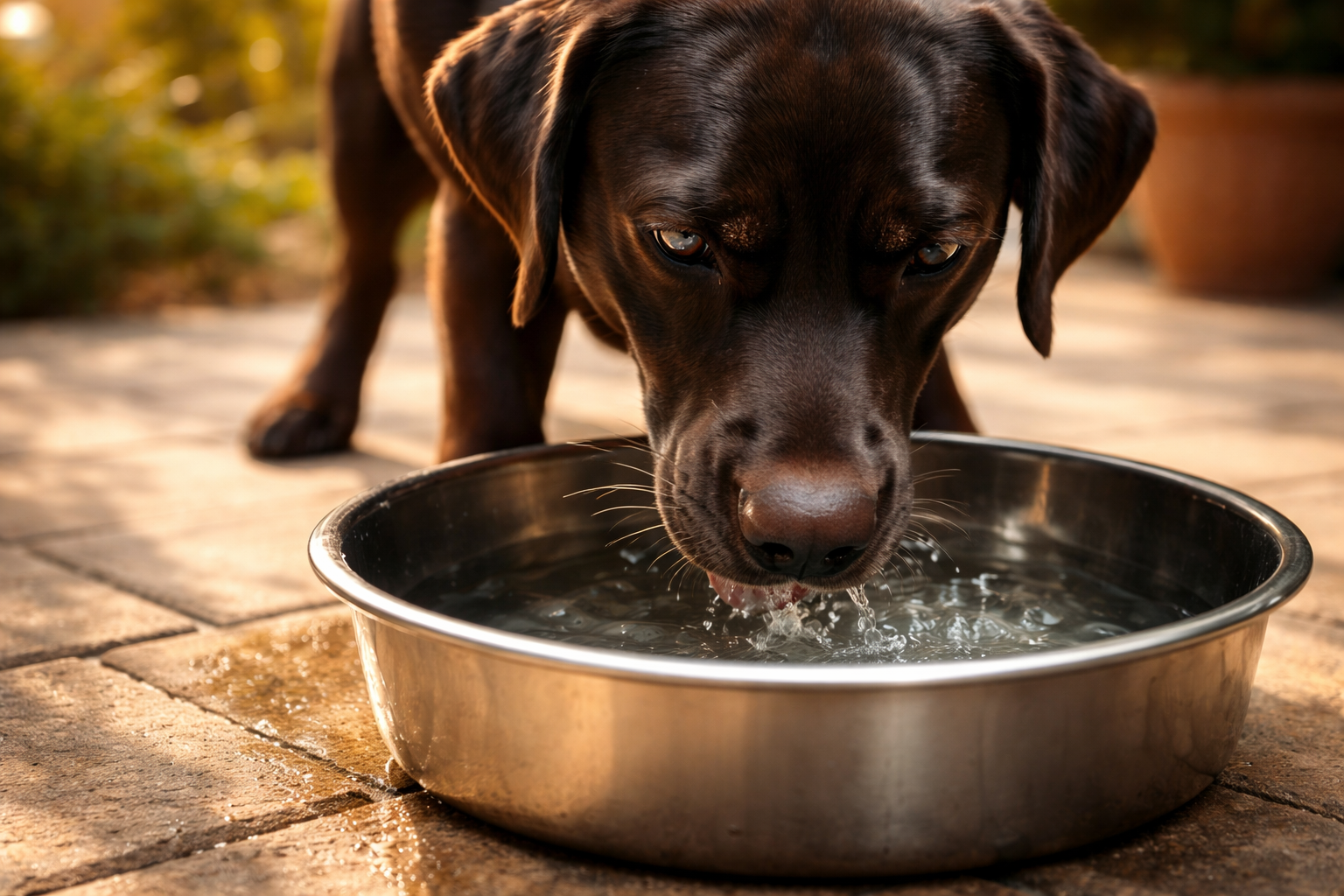
Dogs should drink approximately 0.5 to 1 ounce of water per pound of body weight per day under normal conditions. Dehydration of just 5% causes noticeable lethargy, while 10% dehydration is a veterinary emergency requiring IV fluid therapy. Water makes up 60–80% of a dog's body weight and is essential for nearly every biological process.
Why Is Hydration Critical for Dogs?
Water is required for virtually every biological process in your dog's body. Without adequate fluids, organ systems begin to fail. Dogs lose water throughout the day through panting, breathing, urination, and evaporation from their paw pads.
Proper hydration helps dogs:
- Regulate body temperature — dogs cool themselves primarily through panting, which requires adequate fluid
- Transport nutrients throughout the body via the bloodstream
- Maintain healthy kidney function and flush toxins through urine
- Support digestion and nutrient absorption from food
- Lubricate joints — especially important for large breeds and senior dogs
Severe dehydration can become a medical emergency, potentially leading to kidney failure or organ damage if left untreated. The American Kennel Club (AKC) emphasizes that persistent dehydration warrants immediate veterinary attention.
How Much Water Should a Dog Drink Each Day?
The commonly accepted veterinary guideline is 0.5 to 1 ounce of water per pound of body weight per day. However, this varies based on activity level, weather, diet type, age, and health status.
Dog Water Intake Chart by Weight
| Dog Size | Weight | Daily Water (Normal) | Hot Weather / Active |
|---|---|---|---|
| Toy / Small | 5–20 lbs | 3–20 oz | 5–35 oz |
| Medium | 20–50 lbs | 10–50 oz | 18–88 oz |
| Large | 50–80 lbs | 25–80 oz | 44–140 oz |
| Giant | 80–200 lbs | 40–200 oz | 70–350 oz |
Dog Water Intake Calculator
Use this interactive calculator to get a personalized daily water recommendation for your dog based on weight, activity level, and diet type.
Dog Water Intake Calculator
Enter your dog's weight and lifestyle to get a personalized daily water recommendation.
Recommended Daily Water Intake
25–50 oz
That's approximately 6.3 cups per day
What Factors Affect Your Dog's Water Needs?
Every dog is different. Several conditions may cause your dog to drink more or less water than the standard guideline suggests.
1. Activity Level
Active dogs burn more energy and lose more fluids through panting. Working dogs, sporting breeds, and dogs that exercise daily may need 1.5–2× the baseline water intake. Always offer water during and after physical activity.
2. Weather and Temperature
Hot weather significantly increases hydration needs. Dogs cool themselves primarily through panting, which accelerates fluid loss. On days above 80°F, increase water availability by 50–100%. Always bring a portable water bottle and bowl on walks, hikes, beach trips, and summer outings.
3. Diet Type
Dogs eating dry kibble (which contains only 10% moisture) usually drink considerably more water than dogs on wet food (which contains 70–80% moisture). Dogs eating fresh or raw diets fall somewhere in between. If you switch from wet to dry food, expect your dog's water consumption to increase noticeably.
4. Age and Life Stage
- Puppies — High energy and rapid growth mean frequent drinking; always keep water accessible
- Senior dogs — May drink less due to reduced thirst drive; monitor closely and place bowls near resting areas
- Nursing mothers — Require 2–3× their normal intake to support milk production
5. Health Conditions
Sudden changes in water consumption can signal underlying health issues. Increased thirst (polydipsia) may indicate:
- Kidney disease or urinary tract infections
- Diabetes mellitus
- Cushing's disease (hyperadrenocorticism)
- Liver disease or hormonal disorders
If your dog suddenly drinks far more or far less than usual without a clear environmental reason, consult your veterinarian promptly.
What Are the Signs of Dehydration in Dogs?
Recognizing dehydration early can prevent serious health complications. The AVMA recommends watching for these clinical indicators:
- Skin tent test — Gently pinch skin between the shoulder blades; if it doesn't snap back within 2 seconds, dehydration is likely
- Dry, sticky gums — Healthy gums should be moist and slippery to the touch
- Capillary refill time — Press gum until white, then release; color should return within 1.5 seconds
- Sunken eyes and lethargy indicate moderate to severe dehydration
- Dark yellow or concentrated urine — Well-hydrated dogs produce light yellow urine
- Thick, ropy saliva instead of normal thin saliva
- Loss of appetite combined with reduced energy
How Can You Increase Your Dog's Water Intake?
Some dogs simply don't drink enough on their own. These veterinary-recommended strategies can help encourage consistent hydration:
- Provide fresh water frequently — Refill bowls at least twice daily; dogs prefer clean, room-temperature water
- Use multiple water stations — Place bowls in different areas of your home, on multiple floors if applicable
- Try a pet water fountain — Moving water attracts many dogs and stays fresher longer
- Add water or low-sodium broth to kibble — This can add 2–4 oz of moisture per meal
- Offer ice cubes as treats on hot days — most dogs enjoy crunching them
- Bring water on outings — Use a collapsible bowl or dog-specific water bottle during walks, hikes, and car trips
Moisture-Rich Foods That Support Hydration
Certain dog-safe fruits and vegetables contain high water content and can supplement fluid intake:
- Cucumber — 96% water, low calorie, excellent hydration snack
- Watermelon (seedless, no rind) — 92% water, naturally sweet
- Celery — 95% water, also freshens breath
- Blueberries — 85% water, packed with antioxidants
Always introduce new foods gradually and confirm they are safe for dogs before offering.
Special Hydration Tips for Puppies and Senior Dogs
Puppies
Puppies have high energy levels and may forget to drink while playing. Their smaller body size means they dehydrate faster than adult dogs. Monitor water intake closely, ensure bowls are always accessible and at a comfortable height, and offer water after every play session and meal.
Senior Dogs
Older dogs may drink less due to a reduced thirst drive or mobility issues that make reaching water bowls difficult. Consider placing bowls on every floor and near sleeping areas. Elevated bowl stands can help dogs with arthritis or neck pain drink more comfortably. Monitor senior dogs' water intake daily, as both increased and decreased consumption can signal health changes.
When Should You Call the Veterinarian?
Mild dehydration can often be corrected at home by encouraging drinking, but severe dehydration requires immediate medical attention. Contact your veterinarian if your dog:
- Has vomiting or diarrhea lasting more than 24 hours
- Refuses water entirely
- Appears extremely lethargic or disoriented
- Has very dry, pale, or white gums
- Has not urinated for an extended period (8+ hours)
Veterinarians may administer subcutaneous or intravenous fluids to quickly restore hydration levels. Early intervention prevents progression to organ damage.
Important Notice
This article is for informational purposes only and is not a substitute for professional veterinary care. Excessive thirst (polydipsia) can indicate diabetes, kidney disease, Cushing's disease, or other conditions. Consult your veterinarian if your dog's water consumption changes suddenly or if you observe signs of dehydration.