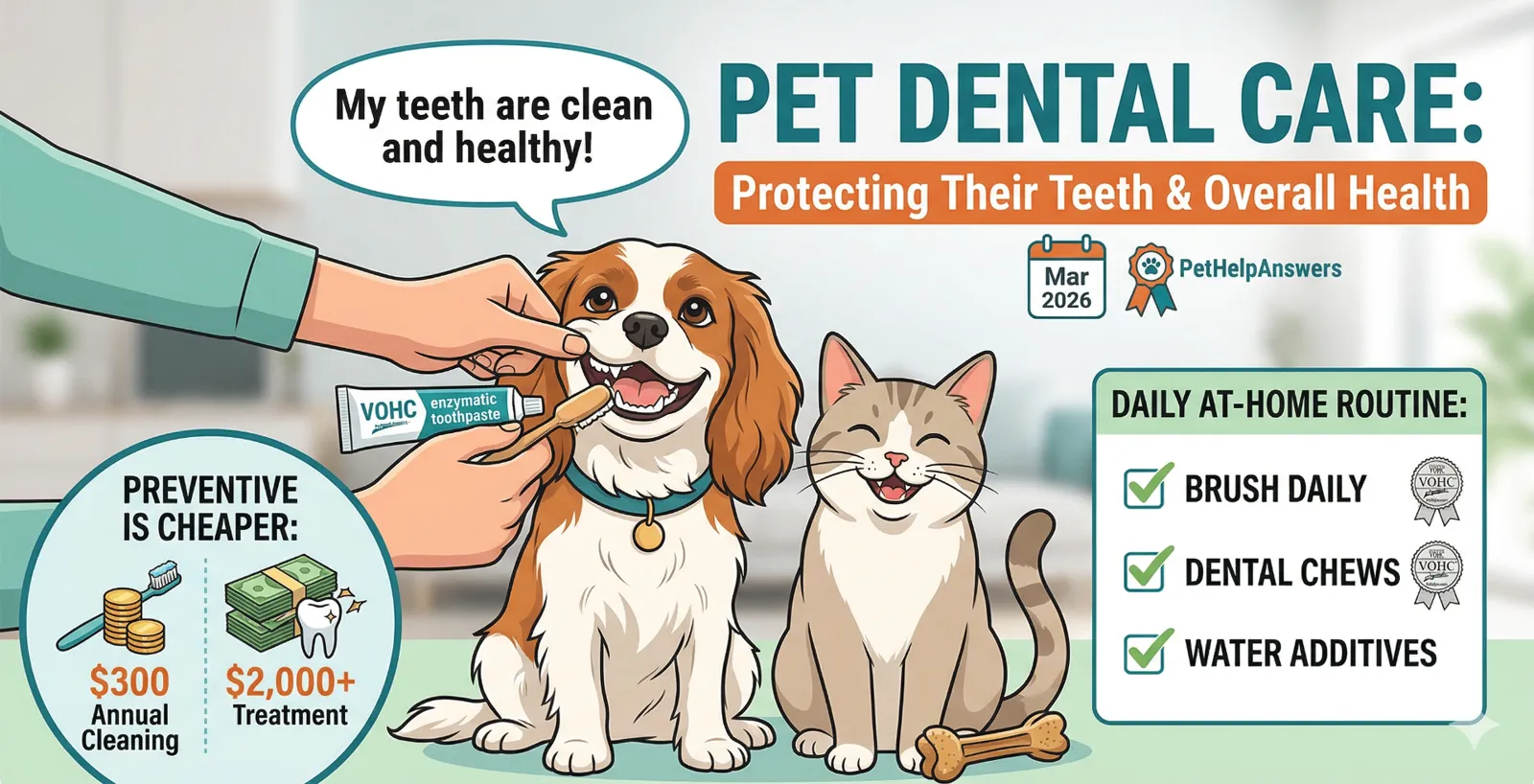
Daily tooth brushing reduces plaque accumulation by 76%, according to veterinary dental research published in the Journal of Veterinary Dentistry. Yet fewer than 2% of dog owners brush their pet's teeth daily. Combined with annual professional cleanings, at-home dental care can prevent 95% of periodontal disease — the most common clinical condition in adult dogs according to the AVMA.
What Tools Do You Need for At-Home Dog Dental Care?
- Enzymatic dog toothpaste — Never use human toothpaste (fluoride is toxic to dogs). The VOHC maintains a list of accepted products
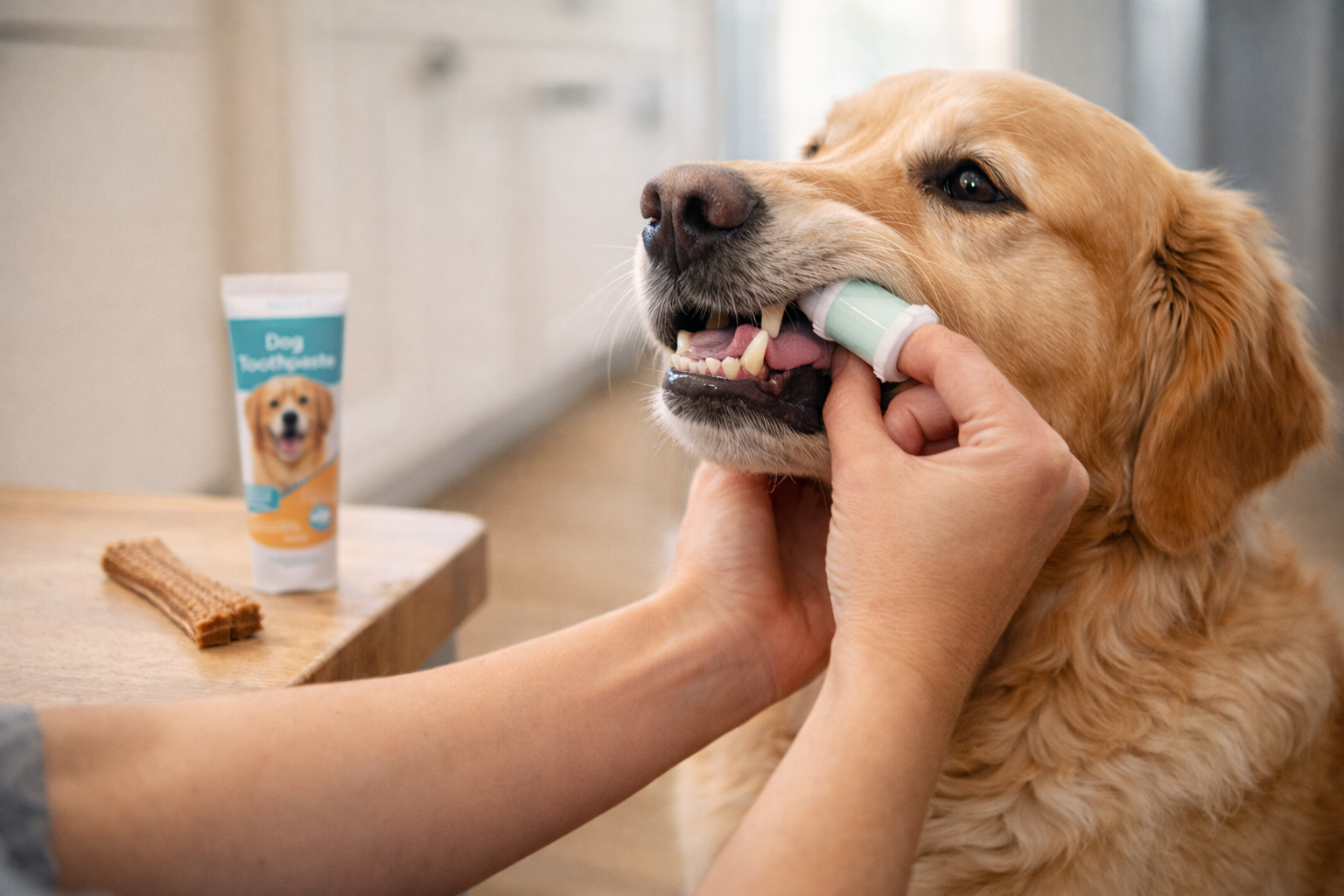
- Finger brush or soft-bristle pet brush — Finger brushes are better for beginners
- VOHC-accepted dental chews — Look for the Veterinary Oral Health Council seal of acceptance
- Water additives — Enzymatic additives reduce bacterial load between brushings
How Do You Brush a Dog's Teeth? (Step-by-Step)
Let your dog taste the toothpaste from your finger for 2–3 days
Gently lift the lip and rub toothpaste on a few front teeth with your finger
Introduce the brush on outer surfaces only — focus on the gumline at a 45° angle
Brush in small circles for 30 seconds per side (outer surfaces are most important)
Reward with praise and a dental chew after each session
Important Notice
At-home dental care supplements but does not replace professional dental cleanings. Annual dental exams under anesthesia are the gold standard for detecting subgingival disease, according to the American Veterinary Dental College (AVDC).