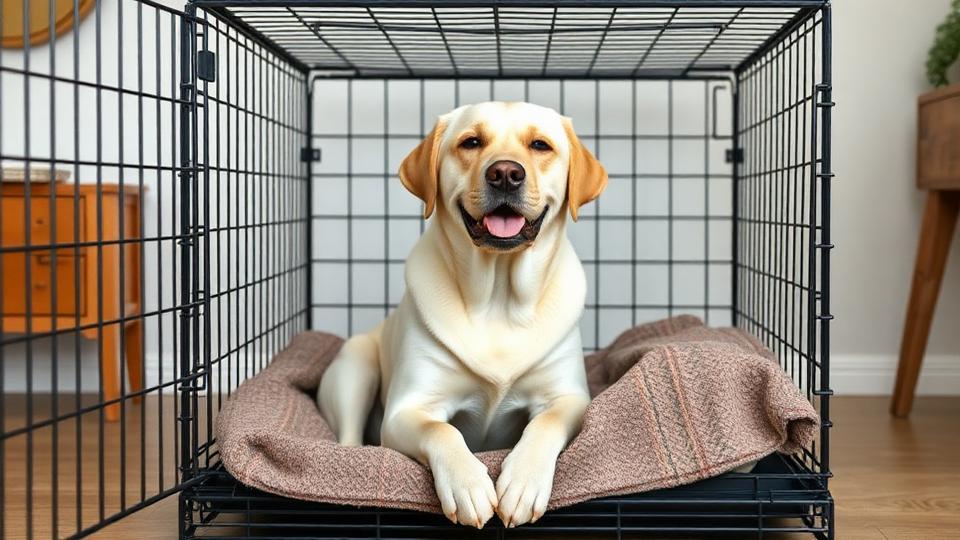
Dogs who are properly crate trained show 62% less destructive behavior and experience significantly lower separation anxiety symptoms, according to a 2022 study in Applied Animal Behaviour Science. The crate taps into a dog's natural denning instinct — providing a secure, enclosed space that reduces cortisol levels and promotes rest.
Choosing the Right Crate
| Type | Best For | Price Range |
|---|---|---|
| Wire Crate | Ventilation, visibility, folding for travel | $30–$80 |
| Plastic Crate | Airline travel, more enclosed/den-like | $25–$70 |
| Soft-Sided | Small dogs, travel, already-trained dogs | $30–$60 |
| Furniture Crate | Aesthetics, permanent home placement | $100–$400 |
The 7-Day Crate Training Protocol
Door open. Feed all meals inside the crate. Toss treats in randomly. Let the dog explore freely — no closing the door yet.
Close the door for 10 seconds while the dog eats. Open before they finish. Repeat 5–6 times.
Close the door for 1–5 minutes. Stay nearby. Reward calm behavior through the crate.
Extend to 10–15 minutes with the door closed. Move a few feet away but stay in sight.
Leave the room for 5 minutes with the dog crated. Return calmly — no excited greetings.
Build up to 30 minutes alone. Always provide a stuffed Kong or chew for crate time.
Troubleshooting: Whining, Barking & Resistance
Whining in the crate usually means you progressed too fast. Go back to the last successful step and build up more slowly. If a puppy whines at night, wait for 3–5 seconds of silence before letting them out (to avoid reinforcing the whining), then take them directly outside for a potty break.
Never let a dog out because they're barking — this teaches them that barking opens the door. Wait for even a 2-second pause, mark it ("good quiet"), and open the door. The exception: puppies under 12 weeks who may genuinely need a potty break.
Important Notice
This article is for informational purposes only. Dogs with severe separation anxiety should not be crated without guidance from a veterinary behaviorist, as crating can intensify panic in these cases.