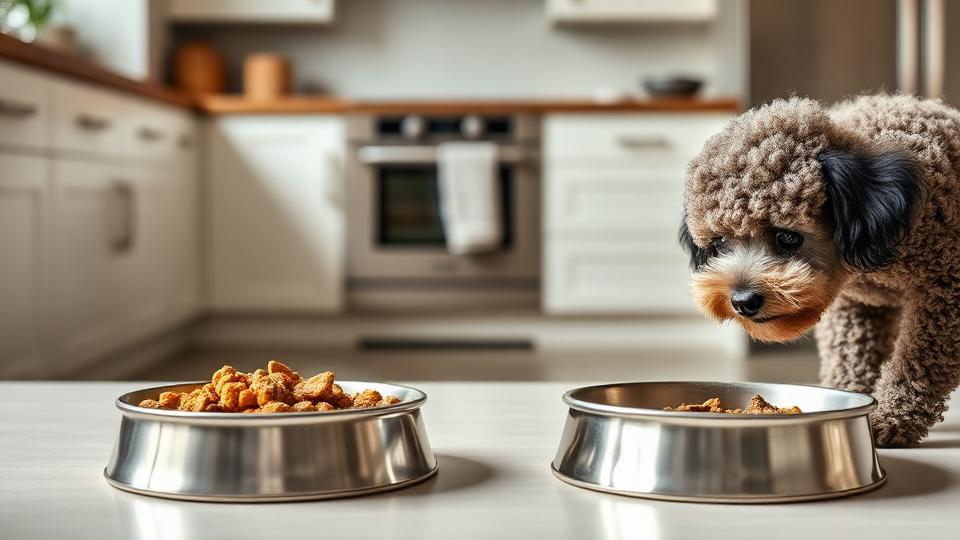
Abrupt diet changes cause gastrointestinal upset in approximately 67% of dogs, according to veterinary gastroenterologists. The gut microbiome requires 5–7 days to adjust to new protein sources and fiber profiles, making gradual transition the only safe approach to switching your dog's food.
The 7-Day Transition Schedule
| Day | Old Food | New Food | Watch For |
|---|---|---|---|
| 1–2 | 75% | 25% | Appetite, stool consistency |
| 3–4 | 50% | 50% | Gas, soft stool |
| 5–6 | 25% | 75% | Any GI symptoms |
| 7+ | 0% | 100% | Full transition complete |
When to Slow Down or Stop
If you see any of these symptoms, go back to the previous ratio for 2–3 days before progressing:
- Loose or watery stools
- Vomiting or regurgitation
- Excessive gas or bloating
- Complete food refusal for more than 24 hours
For dogs with known sensitive stomachs, extend the transition to 14 days by spending 3–4 days at each ratio instead of 2.
Common Reasons to Switch Dog Food
- Life stage change — Puppy to adult, adult to senior
- Weight management — Switching to a weight-control formula
- Food sensitivity — Veterinary-recommended elimination diet
- Medical condition — Prescription diets for kidney, liver, or GI disease
- Product discontinuation — Brand recalls or formula changes
Important Notice
This article is for informational purposes only. If your dog has persistent GI issues during food transitions, consult your veterinarian to rule out underlying medical conditions.
Frequently Asked Questions
0 likes