
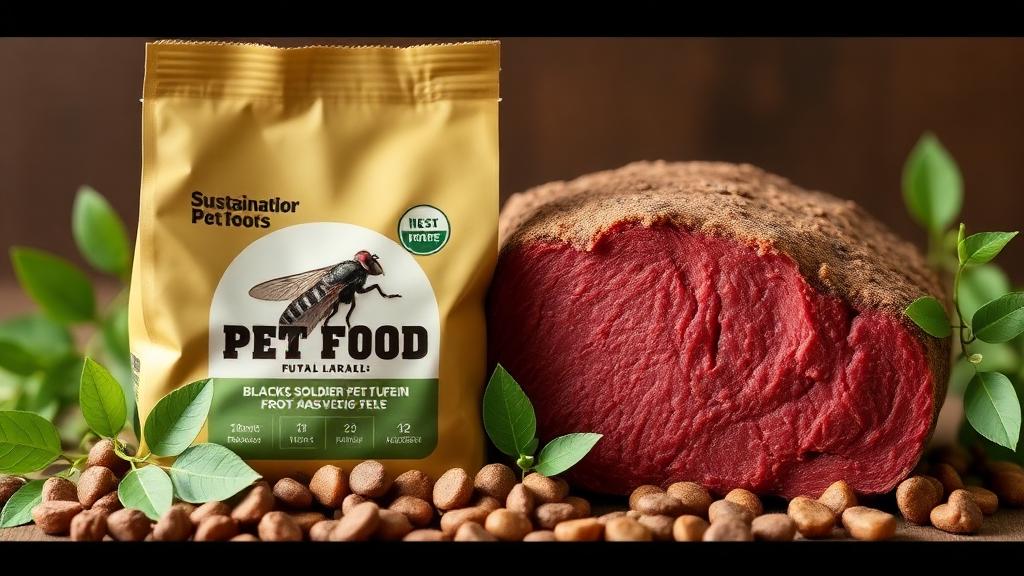
Why Does Pet Food Have Such a Large Environmental Footprint?
A 2017 study published in PLOS ONE by UCLA researcher Gregory Okin estimated that dogs and cats in the U.S. consume roughly 25–30% of the total environmental impact of meat production in the country. This includes 64 million tonnes of CO2e annually—equivalent to the output of 13.6 million cars.
The primary driver is protein source. Traditional pet foods rely heavily on beef, lamb, and chicken—the same resource-intensive proteins that dominate the human food sustainability conversation. As pet parents increasingly apply the same ethical scrutiny to their pet's diet, demand for transparent, lower-impact alternatives has surged.
What Is Black Soldier Fly (BSF) Larvae Protein?
Hermetia illucens (Black Soldier Fly) larvae are farmed specifically for animal feed and pet food. Unlike crickets or mealworms, BSF larvae can be raised on organic waste streams—food scraps, brewery grain, and agricultural byproducts—creating a circular economy where waste becomes high-quality protein.
Key nutritional profile of BSF larvae:
- Protein: 40–44% crude protein (comparable to chicken meal)
- Fat: 30–35% crude fat with favorable lauric acid content
- Amino acids: Complete essential amino acid profile meeting AAFCO standards
- Minerals: High in calcium, phosphorus, and zinc
- Digestibility: 85–92% apparent digestibility in canine feeding trials
How Do Protein Sources Compare Environmentally?
| Protein Source | CO2e (kg/kg protein) | Water (L/kg protein) | Land (m²/kg protein) |
|---|---|---|---|
| Beef | ~50 | ~15,400 | ~164 |
| Lamb | ~40 | ~10,400 | ~185 |
| Chicken | ~10 | ~4,300 | ~7.1 |
| BSF Larvae (Insect) | ~2 | ~150 | ~3.5 |
| Plant-based (Soy/Pea) | ~1.5 | ~2,100 | ~3.4 |
Sources: FAO Life Cycle Assessment data (2023), Oonincx & de Boer (2012), Poore & Nemecek (2018).
What Does the Clinical Evidence Say About BSF Protein for Dogs?
Multiple peer-reviewed feeding trials have validated BSF larvae as a complete protein source for dogs:
- Digestibility: A 2021 study in the Journal of Animal Science found BSF larvae meal digestibility comparable to poultry meal (85–92%).
- Hypoallergenic potential: As a novel protein, BSF larvae do not trigger common food allergies associated with beef, chicken, or dairy—making them a viable elimination diet protein for dogs with diagnosed food sensitivities.
- Palatability: Feeding trials show acceptance rates above 95%, with most dogs showing no preference difference between BSF-based and chicken-based kibble.
- AAFCO compliance: Multiple BSF-based commercial diets now meet AAFCO nutritional adequacy statements for all life stages.
What Are the Limitations and Concerns?
Responsible evaluation requires acknowledging the current limitations:
- Long-term data: While short-term feeding trials (6–12 months) show positive results, multi-generational studies are still limited.
- Chitin content: BSF larvae contain chitin, which may reduce apparent digestibility in some dogs. Processing methods (defatting, enzymatic treatment) mitigate this.
- Regulatory landscape: While approved in the EU and U.S. for pet food, regulatory standards for insect farming vary globally.
- Cost: Currently 15–30% more expensive than conventional protein sources, though prices are declining as production scales.
The Bottom Line
The sustainability case for insect protein is overwhelming—99% less water, 95% less land, 80% fewer emissions than beef. The clinical case is solid and growing, with AAFCO-compliant formulations, strong digestibility data, and hypoallergenic advantages. For pet parents seeking to reduce their household's environmental footprint without compromising nutrition, BSF larvae protein represents the most evidence-backed sustainable option available in 2026.